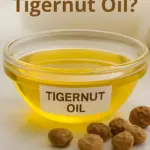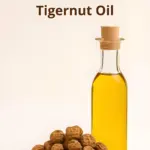


Tigernut oil is a quiet overachiever in natural skincare. Made from small tubers grown near Valencia, it is rich in Oleic Acid and vitamin E, keeping your skin soft, hydrated, and protected. It sinks in fast and never feels greasy, making it easy to use every day. Its strong antioxidant stability keeps it fresh and makes it a reliable ingredient for cannabis infusions, creams, and hair products. Tigernut Oil encapsulates simplicity, lightness, and a subtle luxury all in one.
Table of Contents
*As an Amazon Associate, I earn from qualifying purchases
Botanical Name and INCI
Tigernut oil is derived from the tubers of Cyperus Esculentus, a hardy grass-like plant belonging to the Cyperaceae family. The INCI Cyperus Esculentus Root Oil gets its name because it’s made from the tubers that grow underground, rather than from the seeds or fruit of the plant. This sets it apart from other carrier oils and is why it’s safe for folks with nut allergies, since it’s not actually a nut.
The plant is native to warm, sandy regions and thrives in parts of Africa, the Mediterranean, and Southern Europe. Valencia in Spain is famous for growing tigernuts, which are used to make the tasty drink called Horchata de Chufa. It’s a local favourite!
Beyond its culinary fame, this resilient plant provides a valuable oil used in skincare, haircare, and traditional remedies. The history of the oil really goes hand in hand with how it was used in Spanish and African cultures. People appreciated the tubers not just for food, but also for things like skin and hair treatments.
Extraction Method
It’s made by cold-pressing the dried tubers of the Tigernut plant. The oil is a golden yellow to amber colour with a faint nutty scent and smooth texture. It usually stays pretty liquid in the fridge because it has a good mix of fatty acids. But if it’s freezing outside, it might get a bit cloudy, in the same way that Olive oil does. Just put the bottle in warm water to restore it. It has excellent oxidative stability and can last up to two years when stored correctly.
Composition and Key Nutrients
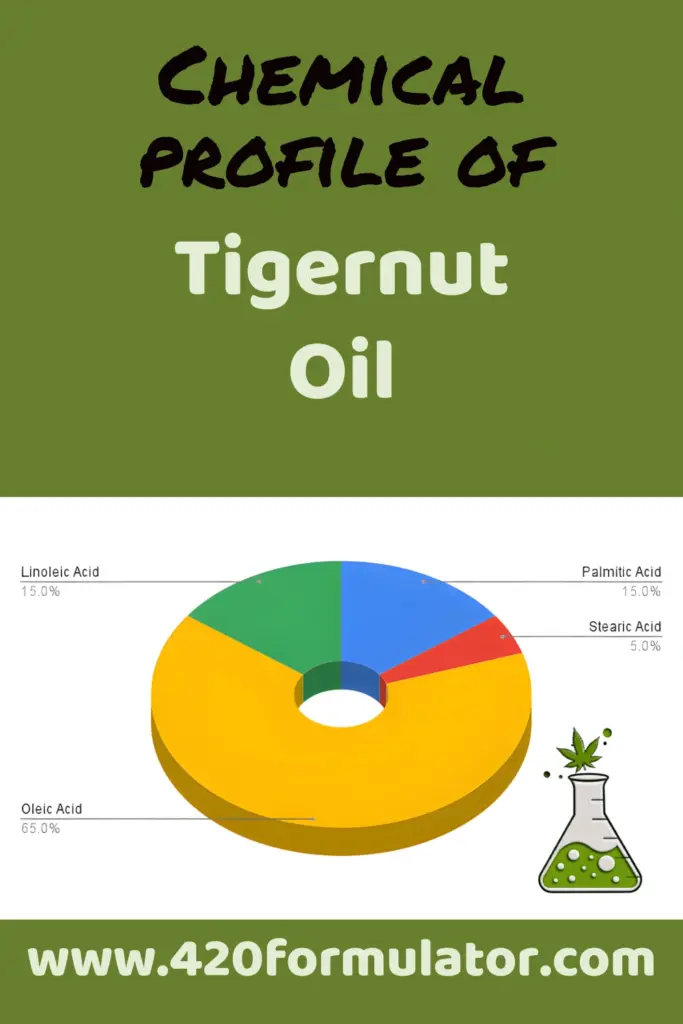
Typical essential fatty acid composition:
- Palmitic Acid: 16%
- Stearic Acid: up to 7%
- Oleic Acid (Omega-9): 60% to 70%
- Linoleic Acid (Omega-6): 10% to 20%
The oil is also rich in vitamin E (tocopherols), phytosterols, and minerals such as calcium, magnesium, potassium, and zinc. These compounds strengthen the skin barrier, improve elasticity, and protect against oxidative damage.
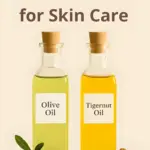
Tigernut oil’s composition resembles Olive oil, but it absorbs faster and feels lighter. It has about 27% oil in its tubers, which makes it one of the rare root crops that produce a good amount of oil.
Oleic Acid (Omega-9)
This monounsaturated fatty acid maintains softness and elasticity in skin and hair. It helps strengthen the skin barrier, supports joint flexibility, and gives the oil its silky texture. Oleic Acid is part of what makes Tigernut oil so stable. It helps the oil stay fresh longer and is really great for soothing dry or irritated skin.
Linoleic Acid (Omega-6)
Linoleic Acid plays a key role in moisture balance. It supports wound healing, softens dry skin, and helps control breakouts by keeping sebum fluid. Its lighter consistency makes the oil suitable for acne-prone skin and gives formulations a smooth, fast-absorbing feel.
Palmitic Acid and Stearic Acid
These saturated fatty acids act as natural emollients and mild cleansers. Palmitic Acid softens the skin and hair without greasiness, while Stearic Acid contributes to the oil’s cleansing and protective qualities.
Texture and Skin Feel
Tigernut oil has a light to medium texture that glides easily across the skin, leaving a silky and non-greasy finish. Despite its richness in Oleic acid, it never feels heavy or sticky. Instead, it creates a smooth, breathable layer that helps keep moisture where it belongs.
It gets absorbed really quickly, and once you put it on, it leaves a nice dry, soft feel. This makes it perfect for daytime skincare or for those products meant for hotter weather. Its faintly nutty, mild scent adds a subtle natural aroma without overpowering other ingredients.
On the skin, Tigernut oil behaves like a short oil – it sinks in quickly but leaves a soft, polished feel. This really works great in creams, lotions, and serums where you want a nice smooth feel, and it soaks in easily.
Stability for Cannabis Infusion
As it is high in monounsaturated fats and tocopherols, Tigernut oil is remarkably stable when exposed to gentle heat. It performs well in double-boiler or slow-cooker infusions above 75°C, making it suitable for decarboxylated cannabis or herbal extractions. Its ability to resist oxidation and spoilage is pretty much like Rice Bran oil and Olive oil. This makes it a great choice for creating infused oils and balms that last a long time.

Skin Care Benefits
Tigernut oil delivers visible hydration and comfort while supporting long-term skin health. It contains natural phytosterols that encourage regeneration and delay the first signs of ageing. The combination of Alpha, Beta, Delta, and Gamma Tocopherols boosts its antioxidant effects, rejuvenating tired skin and reducing free-radical damage. Its silky texture absorbs quickly, leaving skin balanced and smooth.
- Deeply nourishes and softens without clogging pores.
- Encourages new cell renewal and supports skin elasticity.
- Helps reduce fine lines with its Behenic Acid and Oleic Acid content.
- Soothes irritation, dryness, eczema, and psoriasis.
- Ideal for acne-prone or sensitive skin, helping to clear blocked pores.
- Excellent as a makeup primer or aftershave balm for smoothness.
- Helps keep your skin’s natural oils balanced and makes it easier to massage out any muscular stiffness.
- Hydrates nails and cuticles, keeping them supple and strong.

Hair and Scalp Benefits
Tigernut oil nourishes the scalp as well as the skin. Its lightweight texture absorbs quickly, providing essential moisture and minerals to your scalp while soothing dryness and irritation. The oil helps maintain balance by cleansing away excess sebum and preventing clogged follicles. Used regularly, it strengthens and softens hair, promoting a healthy shine without heaviness.
- Penetrates deeply to soothe itching, flakiness, or tight scalp.
- Helps remove excess sebum and cleanse congested pores when added to shampoo.
- Locks in scalp moisture and improves lipid balance, reducing dandruff.
- Stimulates hair follicles to encourage stronger, thicker growth.
- Softens coarse or brittle hair without stickiness or grease – use as a great beard oil!
- Conditions and protects hair from breakage while promoting natural shine.
- Does not clog pores or weigh the hair down.
Other Uses
Tigernut oil is used in traditional medicine and folk practices to reduce inflammation and boost overall vitality. In Ayurveda, the oil and its tubers have been associated with grounding and cooling properties that help restore balance.
Recent studies have really shown how versatile Tigernut oil is. It has been explored as a sustainable option for biodiesel, as a mild lubricant in precision equipment, and waterproofing textiles. These wide-ranging applications show just how adaptable and environmentally friendly this oil truly is.
Topical Use and Formulation Tips
Tigernut Oil is versatile and has a comedogenic rating of about 2, making it suitable for most skin types, including sensitive and acne-prone skin.
It can be used at 5% to 100% depending on the product. For face serums and light oils, 5% to 30% keeps the feel silky. In lotions and creams, 20% to 60% gives cushion without heaviness. It can also be used neat as a body or massage oil. You could swap it for the Rice Bran oil in this wonderful Massage Oil Blend.
Shelf life is up to 24 months when stored cool and dark. It is effective in balms, serums, lotions, and scalp treatments, and its stability makes it a dependable carrier oil for slow cannabis infusions. Click to read How to Make Cannabis-Infused Oils.
Safety and Storage
Keep tightly capped in a cool, dark place. Add mixed tocopherols to extend shelf life for infusions. Suitable for all skin types, including sensitive skin. No known risk of nut allergies. Safe during pregnancy and for baby skincare. Does not cause photosensitivity.
Conclusion
Tigernut oil is one of Spain’s best-kept skincare secrets. It’s packed with Oleic Acid and vitamin E, which really helps to nourish, protect, and rejuvenate your skin and hair. Plus, it makes for great cannabis infusions that stay stable. Its gentle texture and rich antioxidants make it a versatile product for use as massage oil, serum base, or scalp conditioner.
🎧 Listen Instead
 Spotify
 YouTube
FAQ
What is Tigernut Oil and where does it come from?
Tigernut oil is a golden, nutrient-rich oil pressed from the tubers of Cyperus esculentus, also known as chufa. It’s not actually a nut but a small root vegetable grown around Valencia, Spain, where it’s also used to make Horchata de Chufa.
Is Tigernut Oil safe for people with nut allergies?
Yes. Despite the name, Tigernut oil doesn’t come from nuts. It’s extracted from underground tubers, making it suitable for anyone who avoids nut-based oils.
What does Tigernut Oil do for skin and hair?
Tigernut oil hydrates and protects both skin and hair without feeling greasy. Its blend of Oleic and Linoleic acids softens dryness, supports elasticity, and balances sebum. On the skin, it smooths texture and helps calm irritation; on the scalp, it nourishes roots, adds shine, and reduces flakiness.
Can Tigernut Oil help with acne or sensitive skin?
It can. Tigernut oil has a light, non-comedogenic texture and contains Linoleic Acid, which helps keep sebum fluid and reduces clogged pores. Many people with sensitive or acne-prone skin find it soothing and balancing.
Is Tigernut Oil good for making cannabis-infused skincare or herbal oils?
Yes. Its high monounsaturated fat content makes it very stable during slow infusions. It resists oxidation well, so it’s excellent for cannabis or herbal oils that need to stay fresh over time.
How should I store Tigernut Oil and how long does it last?
Keep it in a cool, dark place with the lid tightly closed. When stored properly, it can last up to two years. Adding natural vitamin E can help extend its shelf life.

If you liked this blog post, I would love it if you shared it with a friend.
If you use Pinterest, please pin this post.