
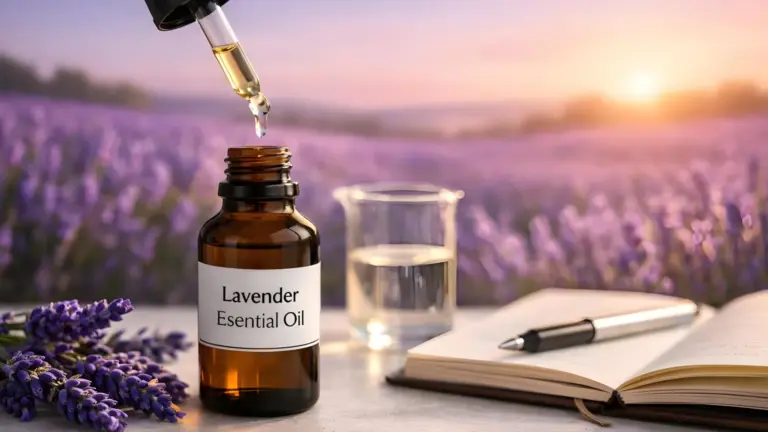
Lavender essential oil benefits are often reduced to its reputation as a sleep oil, but its true value lies in its versatility, balance and ability to enhance almost any blend. From skincare formulations to synergistic aromatherapy combinations, lavender works quietly in the background, strengthening and harmonising without overpowering.
Understanding lavender essential oil benefits properly means looking beyond the clichés and focusing on how the oil performs in real formulations.
*As an Amazon Associate, I earn from qualifying purchases
*As a Blimburn Seeds affiliate, I earn from qualifying purchases
Table of Contents
Botanical Name and INCI
Botanical name: Lavandula angustifolia
INCI name: Lavandula Angustifolia Oil
Lavender essential oil most commonly refers to Lavandula angustifolia, sometimes described as “True Lavender” or “Fine Lavender”. The INCI name will vary depending on the species used, so it is important to check the botanical identity when formulating. Spike Lavender, for example, is Lavandula latifolia, and Lavandin is a hybrid, Lavandula × intermedia. Each has a distinct chemical profile and behaves differently in blends and skincare products.
For therapeutic and skincare applications, Lavandula angustifolia is generally preferred because of its higher ester content and softer, less camphoraceous character.
History of Lavender Essential Oil
Lavender has been associated with cleanliness and freshness for centuries. Before modern aromatherapy, people washed clothes by rivers and often dried them on lavender bushes in the sun. The linen dried faster, stayed cleaner, and returned to the home smelling fresher and repelled insects. It is widely believed that the words “lavande” and “laundry” share their roots in this practical use.
France became the natural centre of lavender cultivation because the climate in Provence suits the plant so well. Grasse’s perfume houses relied on lavender as a key aromatic ingredient, making it a cornerstone of traditional perfumery. For generations, lavender was grown not just for scent, but for structure and balance within fragrance compositions.
Today, Bulgaria produces a large volume of high quality lavender oil. In practical formulations, Bulgarian lavender stands out for its reliability, balanced profile, and consistent performance. While origin matters, what really counts is how the oil performs in the finished blend.
Even though lavender has a long history linked to cleaning and fragrance, its therapeutic reputation developed much later. It was not until the twentieth century, when essential oil chemistry began to be properly studied, that we gained a clearer understanding of how lavender works, both scientifically and within traditional practice.
Origins, Altitude and Quality
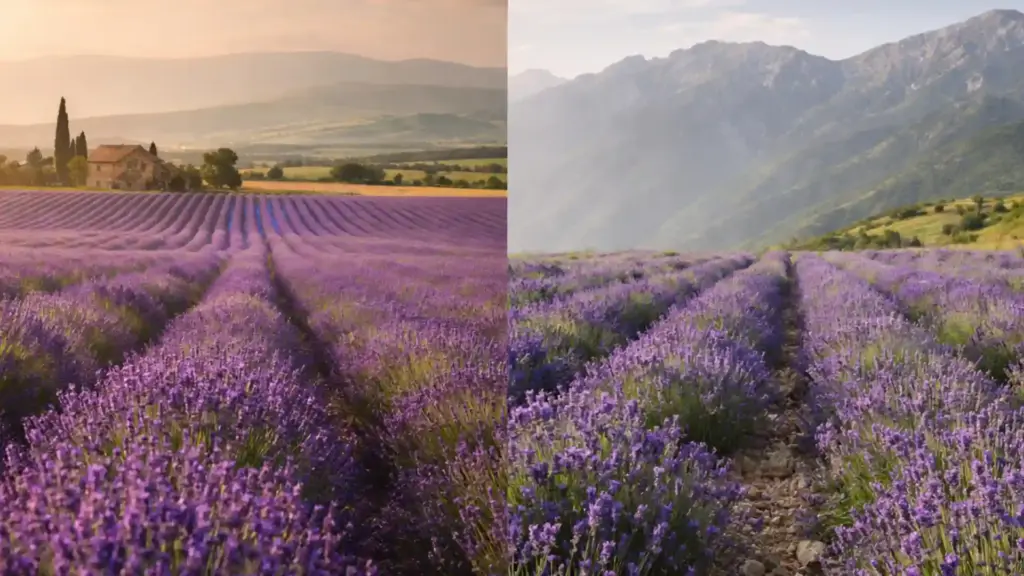
Lavender grows in many parts of the world, but climate, soil and altitude all influence the final oil. France has long been associated with lavender cultivation in Provence, and for generations it supplied the perfume houses of Grasse. Today, Bulgaria produces a significant proportion of the world’s lavender oil. Both regions are capable of producing high quality oil, but the real determining factors are growing conditions and careful distillation rather than the country name on the label.
Altitude plays a particularly important role. Lavender grown above 1500 metres typically produces a higher proportion of esters. These esters give the oil a softer, fruitier and more refined character, reducing the sharper camphoraceous note sometimes found in lower altitude crops. Oils from these regions are often labelled as “fine” lavender.
In practical terms, this makes a difference. High-altitude lavender tends to feel more balanced and rounded in skincare and aromatherapy blends. It integrates easily and often has a clearer effect on the mental and emotional aspects of tension. By contrast, Spike Lavender and Lavandin are more robust and are often better suited to products such as soap, where fragrance strength and durability are more important than subtlety.
As always, origin tells part of the story. The real measure of quality is how the oil performs in formulation and in use.
Extraction Method
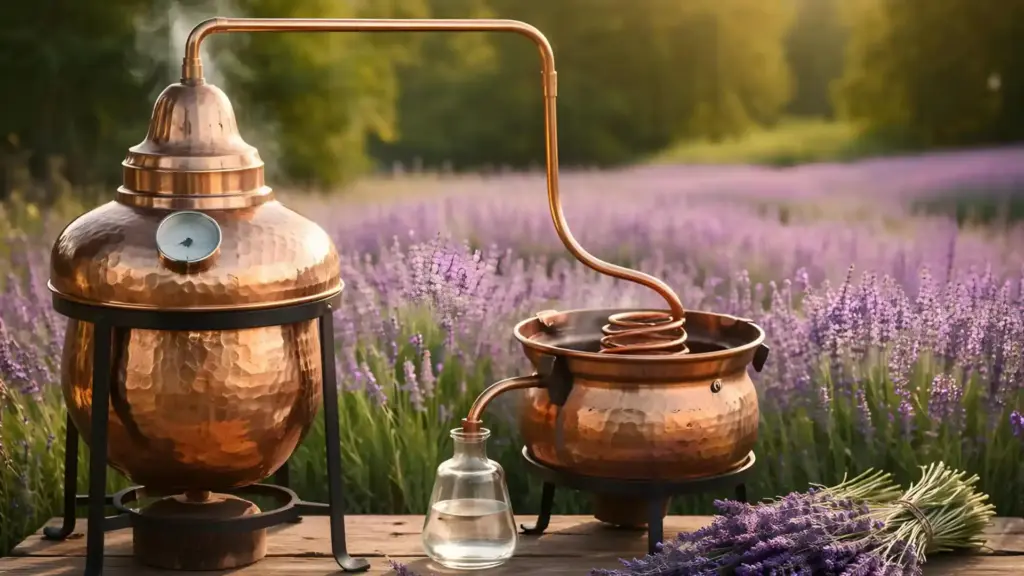
Lavender essential oil is steam distilled from the flowering tops of the plant, usually while the flowers are fresh. Timing of harvest makes a difference. Oil distilled too early or too late in the flowering cycle can shift the balance of the final chemical profile.
Steam distillation is a relatively gentle process when done properly. The plant material is exposed to steam, which releases the volatile compounds. These vapours are then condensed and separated into essential oil and hydrosol. The quality of distillation matters just as much as the quality of the crop. Poor temperature control or rushed processing can alter the fragrance and reduce overall refinement.
The resulting oil is typically classified as a middle note in perfumery. Its aroma can range from soft, fruity and floral to slightly herbaceous with a faint camphor edge, depending on altitude and variety. A well-distilled lavender should feel clean, rounded and balanced rather than sharp or harsh.
Chemical Profile of Lavender Essential Oil
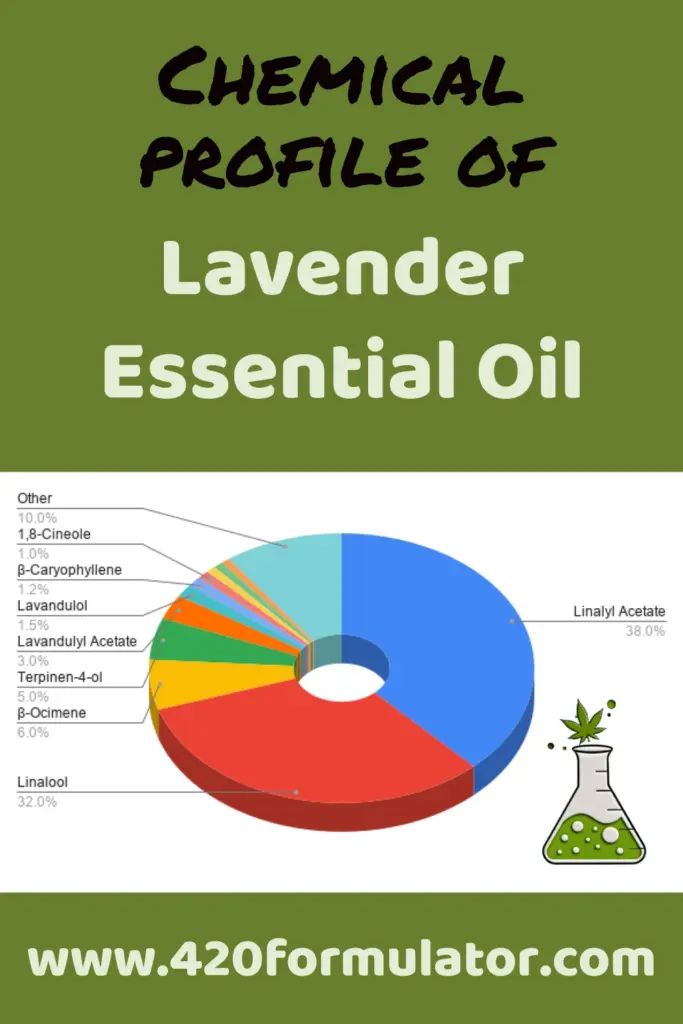
The chemical profile of lavender essential oil varies according to species, altitude, soil conditions and harvest timing. While the overall character of the oil remains recognisable, the balance between alcohols, esters and minor constituents can shift noticeably from one crop to another. Understanding this balance is what explains why some lavenders feel soft and rounded, while others appear sharper or more camphoraceous.
Major Constituents
Lavandula angustifolia typically contains a high proportion of Linalool, a monoterpenol, and Linalyl Acetate, an ester. Together, these two compounds usually make up the majority of the oil and largely define its aroma and behaviour. The balance between them influences whether the oil feels softer and more floral or slightly sharper and more herbaceous.
Smaller amounts of Lavandulol, Lavandulyl Acetate, Beta-Caryophyllene and trace camphor may also be present, depending on variety and growing conditions. In well-grown, high-altitude lavender, ester content is often higher, contributing to the smoother and more refined profile associated with so-called “fine” lavender.
This variation is natural. Lavender oil should be evaluated based on the overall balance of its components and their effectiveness, not just on a single percentage.
Key Terpenes and Their Actions
While lavender contains dozens of constituents in small amounts, a few key compounds largely determine how the oil behaves in both skincare and aromatherapy. Understanding these helps explain why lavender can calm irritation, support the nervous system and integrate so well into blends.
Linalool
Linalool is one of the dominant monoterpenols in lavender essential oil. It contributes to the fresh, slightly floral aspect of the aroma and is known for its calming and antimicrobial properties. In topical applications, Linalool is generally well tolerated when properly diluted and can support irritated or blemish-prone skin.
Linalool is also found in certain cannabis cultivars, particularly those described as calming or relaxing. In both essential oils and cannabis, Linalool is associated with nervous system support and a settling effect on mental tension. Its presence helps explain why lavender often feels mentally clarifying rather than sedating when used in balanced amounts.
Linalyl Acetate
This is the ester that gives fine lavender its softer, fruitier edge. Esters are generally calming in nature, and in lavender they are a big part of why the oil feels relaxing without being heavy.
Higher altitude lavender usually contains more esters, which is why these oils tend to smell smoother and less camphor-like. In blends, Linalyl Acetate helps round off sharper oils and pull everything together. That smoothing effect is one of the main reasons lavender works so well alongside other essential oils.
Beta-Caryophyllene
Although present in smaller amounts, Beta-Caryophyllene adds another layer to lavender’s overall profile. It is a sesquiterpene also found in black pepper, clove and many cannabis cultivars. What makes it particularly interesting is its interaction with the CB2 receptor, linking it to anti-inflammatory pathways in the body.
Lavender is not typically described as a caryophyllene-rich oil, but even modest levels can contribute to its soothing effect. When lavender is paired with other oils or plant extracts that also contain beta-caryophyllene, the result can feel more physically grounding and supportive, especially in blends designed for muscular tension or general discomfort.
Lavandulol and Lavandulyl Acetate
These constituents are often overlooked because they appear in smaller percentages, yet they contribute to the distinctive character of true lavender. They add nuance to the fragrance and support the rounded, cohesive nature of the oil.
It is rarely one compound acting alone. The balance between alcohols, esters and these minor components is what gives lavender its versatility. That balance is also what allows it to move easily between skincare, aromatherapy and blend work without feeling out of place.
Lavender and Cannabis Terpene Synergy
Lavender and cannabis share several overlapping terpenes, most notably Linalool and Beta-Caryophyllene. This common ground helps explain why certain cannabis cultivars can feel aromatically familiar to anyone who works regularly with essential oils.
Rather than focusing on strain names, it is far more useful to look at terpene testing data. Strains that express higher levels of Linalool are often described as calming and settling. Those strains richer in Beta-Caryophyllene tend to feel more physically grounding. When lavender essential oil is paired with cannabis extracts that reflect a similar terpene balance, the overall profile can feel more cohesive and integrated.
For formulators, this is where things become interesting. Lavender can act as a bridge, reinforcing shared terpenes and smoothing more dominant notes within a cannabis-infused product. The emphasis should always remain on composition rather than marketing labels. Terpene structure tells you far more than a strain name ever will.
Used thoughtfully, the synergy between lavender and cannabis is not about amplification but about balance. It is the chemistry that links them, and understanding that chemistry allows you to design products that feel intentional rather than accidental.
If you’re working with cannabis extracts, terpene testing matters more than strain names, especially when you’re aiming for consistent formulation results.
Lavender Essential Oil Benefits
Lavender essential oil benefits are rooted in balance rather than intensity. While some essential oils excel in one specific area, lavender performs reliably across skin care, scalp support and aromatherapy. It is rarely the most dramatic oil in a blend, but it often makes everything else work better.
Skin Benefits
Lavender works in skincare because it brings balance. It can calm, support and protect the skin without overwhelming the rest of the formula.
- Works particularly well when blended with oils such as spearmint for freshness or cedarwood for a stronger deodorising profile.
- Supports the skin’s recovery process in minor burns. While some historical stories are exaggerated, research does support its role in assisting healing when properly diluted.
- Useful in blends for eczema or psoriasis-prone skin where calming and antifungal support are needed. Experimental research indicates that Lavandula angustifolia and its major constituents, including Linalool and Linalyl Acetate, can reduce inflammatory responses in psoriasis- and dermatitis-like models, supporting its inclusion in blends for stressed or reactive skin when appropriately formulated.
- Antibacterial and antifungal, making it useful in blends for blemish-prone or congested skin.
- For good reasons, it is often found in massage blends. This classic Massage Oil Formulation uses lavender as the main essential oil.
- Helps calm visible redness and may improve the appearance of acne scarring over time.
- Useful in foot creams and gels to discourage fungal issues such as athlete’s foot.
- Provides a gentle toning and rejuvenating effect suitable for most skin types. It would be excellent to use in this Pumpkin Seed Body Oil formulation.
- Adds a subtle deodorising quality, making it effective in sports lotions, gels and foot powders.
Hair and Scalp Support
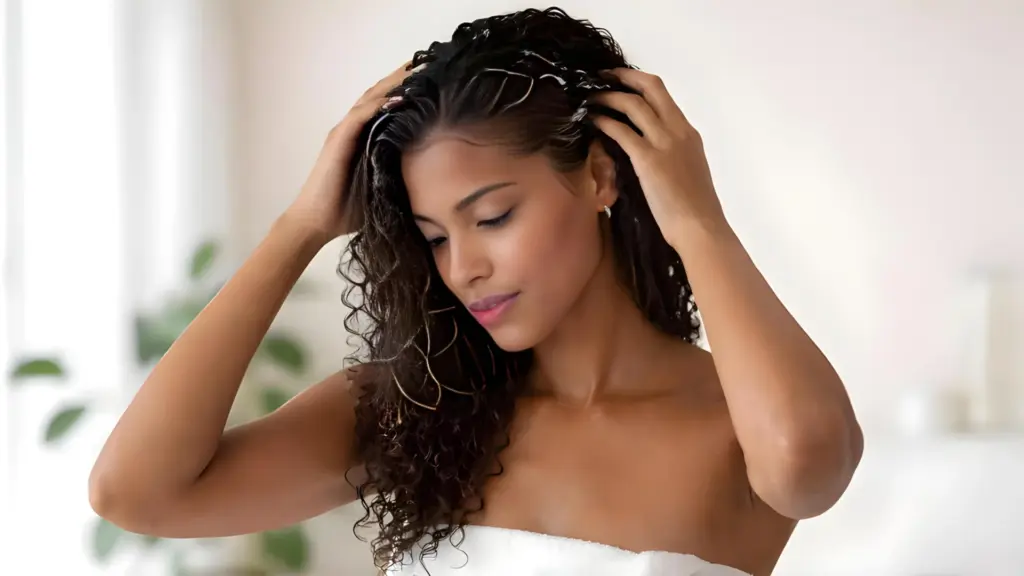
Lavender is not a miracle hair oil, and it doesn’t need to be. Where it earns its place is in calming the scalp.
- Helps soothe an itchy or irritated scalp, whether that irritation comes from dryness, product build-up or underlying skin conditions.
- Useful in blends for scalp eczema or psoriasis because of its calming and antifungal profile.
- Suitable in blends for dandruff and flaky scalp conditions due to its calming and antifungal nature.
- Adds balance to stronger scalp oils such as rosemary or peppermint, preventing a formula from feeling too harsh or stimulating.
- Works well in conditioners and scalp serums where the aim is comfort and long-term support rather than dramatic short-term effect.
- A small randomised trial found that a blend including lavender, rosemary, thyme and cedarwood improved hair regrowth in people with alopecia areata compared with carrier oil alone. This supports lavender’s role as part of a balanced scalp protocol, rather than as a stand-alone solution.
Most of the clinical research around essential oils and hair concerns looks at blends rather than lavender alone.
Aromatherapy Benefits
Lavender’s reputation in aromatherapy is well established, but it is often oversimplified. It is not simply a “sleep oil”. Its strength lies in how it settles the nervous system without dulling it.
- Supports relaxation without heavy sedation, particularly when used in low to moderate amounts.
- Helps take the edge off nervous tension and mental agitation.
- Useful in blends designed for evening routines, meditation or decompression after stress.
- Can feel mentally clarifying rather than drowsy when balanced correctly in a formula.
- Works well alongside frankincense for grounding or citrus oils to soften sharper top notes.
- Traditionally used as a natural insect deterrent. When diffused or added to room sprays, lavender can help discourage moths and certain flying insects while keeping the atmosphere pleasant.
It is worth noting that more is not always better. Used excessively, lavender can become stimulating rather than calming. Subtlety tends to produce better results, especially in room diffusion.
Lavender as a Synergist
Lavender essential oil benefits are not limited to what it does on its own. One of its most valuable qualities is how it enhances the performance of other essential oils in a blend.
This is where many people underestimate it. Lavender is rarely the strongest oil in a formula, but it often makes everything else work more effectively. It softens sharper notes, supports the overall structure of a blend and helps bring balance where other oils might feel dominant.
Because of its balanced ratio of alcohols and esters, lavender integrates easily with both top and base notes. In therapeutic blends, it can reinforce calming oils without increasing heaviness. In more stimulating blends, it can smooth the edges without dulling the intended effect.
This synergistic behaviour is one of the reasons lavender appears in so many classical aromatherapy formulas. It acts as a bridge, linking different aromatic profiles together so that the final composition feels cohesive rather than fragmented.
Understanding this aspect of lavender essential oil benefits shifts the focus away from single-ingredient thinking and towards intelligent formulation. Lavender is not simply an addition for fragrance; it is often the element that makes a blend feel complete.
Formulating with Lavender
Lavender is easy to work with and generally well tolerated when properly diluted.
For most leave-on facial and body products, a dilution of 0.5% to 1% is usually sufficient. Increasing the percentage does not necessarily improve performance and can shift the fragrance or increase the likelihood of sensitivity. Subtlety produces a more refined result.
High-altitude lavender, with its higher ester content, is often preferred where a softer and more rounded aromatic profile is required. Spike Lavender or Lavandin, being more robust, are typically better suited to soap making where fragrance strength and retention through saponification are priorities.
In cannabis-infused topicals, lavender can complement shared terpenes such as Linalool and Beta-Caryophyllene without overwhelming the base oil. Lavender does not need a heavy hand. A little goes a long way.
Essential Oil Blends with Lavender
These blends are designed for diffusion or aromatic use. Dilute appropriately before topical application.
Evening Unwind
Calming without heaviness. Suitable for evening routines or winding down after mental strain.
8 drops Lavender + 6 drops Frankincense + 6 drops Sweet Orange = 20 drops total.
Focus and Clarity
Fresh and steady. Lavender prevents sharper oils from becoming overly stimulating.
7 drops Lavender + 7 drops Rosemary + 6 drops Lemon = 20 drops total.
Clear Air
Rosalina is naturally high in Linalool, which reinforces Lavender’s calming profile without increasing intensity. Green Mandarin keeps the blend bright and breathable. This is a gentle option for room diffusion or respiratory support blends.
7 drops Lavender + 7 drops Rosalina + 6 drops Green Mandarin = 20 drops total.
Forest Calm
Black Spruce adds a resinous, adrenal-support style depth that pairs well with Lavender’s nervous system calming effect. Frankincense stabilises the structure. This is grounding without sedation and works well for stress-related tension.
8 drops Lavender + 7 drops Black Spruce + 5 drops Frankincense = 20 drops total.
Muscle Comfort
Balanced warmth and relaxation. Suitable for post-exercise blends when diluted correctly.
8 drops Lavender + 6 drops Plai + 6 drops Black Pepper = 20 drops total.
Skin Balance
Fragonia™ brings antimicrobial and emotional balancing qualities, while rosalina reinforces linalool content. Together they create a skin-friendly, calming profile suitable for diluted topical use.
8 drops Lavender + 6 drops Fragonia™ + 6 drops Rosalina = 20 drops total.
Grounded Space
Centred and steady. Useful for meditation or quiet work.
8 drops Lavender + 7 drops Frankincense + 5 drops Cedarwood = 20 drops total.
Evening Ground
Lavender and Patchouli share grounding qualities but express them differently. Patchouli brings depth and earthiness, while green mandarin adds a soft lift without sharpness. This blend is steady and emotionally anchoring without becoming heavy.
8 drops Lavender + 7 drops Patchouli + 5 drops Green Mandarin = 20 drops total.
Clean Air Blend
Fresh and clarifying without becoming sharp. Suitable for room diffusion.
7 drops Lavender + 7 drops Eucalyptus + 6 drops Spearmint = 20 drops total.
Deep Earth
This is heavier and more introspective. Patchouli provides earthy depth, black spruce adds conifer strength, and lavender prevents the blend from becoming too dense. Useful for meditation or evening diffusion.
7 drops Lavender + 7 drops Patchouli + 6 drops Black Spruce = 20 drops total.
Terpene Bridge
This blend reflects the shared terpene profile discussed earlier. Lavender provides Linalool, Black Pepper contributes Beta-Caryophyllene, and Sweet Orange introduces Limonene for lift. The result is balanced rather than sedating, grounded without heaviness, and structurally cohesive. It works well in diffusion or as the aromatic component of a topical blend when properly diluted.
8 drops Lavender + 6 drops Black Pepper + 6 drops Sweet Orange = 20 drops total.
Contraindications and Safety
Lavender essential oil is generally regarded as one of the safer essential oils when used correctly. That does not mean it should be used casually or undiluted. Safety depends on proportion, age, context and common sense.
- Always dilute before topical application. For most leave-on products, 0.5% to 1% is appropriate for adults. For young children, use significantly lower dilutions, typically around 0.25% to 0.5%, and avoid routine use on infants unless guided by a qualified practitioner.
- Do not ingest essential oils unless under the supervision of a medically qualified professional trained in internal use.
- Although lavender is often considered suitable during pregnancy, excessive use is not advisable. Keep levels low and avoid prolonged high-dose exposure.
- In some individuals, higher concentrations of lavender can feel stimulating rather than calming. More is not better.
- Patch testing is recommended for sensitive or reactive skin.
- Take care when diffusing around babies, young children or pets. Ensure the room is well ventilated and allow them to leave the space freely.
Chakra Associations
Lavender essential oil is often associated with emotional balance, clarity and gentle spiritual awareness. Its calming yet mentally clarifying nature makes it particularly aligned with the upper chakras, while still supporting emotional flow.
2nd Chakra (Sacral Chakra / Svadhisthana)
This is your centre for pleasure, creativity, and emotional flow. It helps you connect with your feelings, sexuality, and the simple joys of life. When balanced, you’re open to new experiences and comfortable in your own skin.
Location: Lower abdomen, below the navel
Qualities: Emotions, creativity, pleasure, sexuality
Mantra: “I allow creativity and pleasure into my life”
Colour: Orange
Element: Water
Stone: Carnelian, Orange Calcite, Moonstone
Lavender supports emotional expression without overwhelm. It can help soften emotional rigidity and encourage a more fluid response to stress.
6th Chakra (Third Eye Chakra / Ajna)
Your third eye is your inner vision, intuition, insight, and perception. It helps you see the bigger picture, trust your instincts, and tune in to your inner guidance. Balanced, it sharpens your mind and imagination.
Location: Forehead, between the eyebrows
Qualities: Intuition, insight, perception, wisdom
Mantra: “I trust my intuition and inner wisdom”
Colour: Indigo
Element: Light
Stone: Amethyst, Sodalite, Labradorite
Lavender’s mental clarity and calming effect make it particularly supportive here. It can quiet mental noise while keeping awareness sharp.
7th Chakra (Crown Chakra / Sahasrara)
This chakra is your connection to the universe and the higher self. It brings a sense of spiritual awareness, unity, and peace. When open, it helps you feel at one with everything, fostering wisdom and enlightenment.
Location: Top of the head
Qualities: Spiritual connection, awareness, unity
Mantra: “I am connected to the universe and open to wisdom”
Colour: Violet or White
Element: Thought (Cosmic energy)
Stone: Clear Quartz, Amethyst, Selenite
Lavender is widely used in meditation because it is purifying, expansive and grounding at the same time. It supports stillness without heaviness.
Chinese Emotions of the Organs
In Traditional Chinese Medicine, each main emotion is linked to a specific organ, so how you feel affects your body and vice versa. Keeping your emotions balanced helps keep your organs healthy, and looking after your organs supports your emotional wellbeing.
Heart and Colon
In Traditional Chinese Medicine, the heart and colon are associated with joy, love and the ability to let go. When this system is out of balance, there may be difficulty releasing emotionally or physically, sometimes manifesting as constipation. Lavender’s calming and harmonising qualities align strongly with the Heart. It helps soften emotional agitation and supports a steady sense of inner balance. Where there is emotional restlessness or resistance to letting go, lavender can assist in restoring a gentler rhythm.
Lungs and Small Intestines
The lungs and small intestines are linked with guilt, grief and unresolved emotional heaviness. When this system is strained, breathing can feel shallow and the body may hold tension rather than releasing it. Lavender’s ability to quiet nervous agitation and encourage deeper breathing makes it particularly relevant here. In states of grief or lingering guilt, lavender can help soften emotional tightness and promote a more open, settled state.
Liver
The liver is associated with anger, resentment, bitterness and frustration. When emotional tension builds without resolution, this system is often implicated in TCM. Lavender’s balancing nature can help ease emotional intensity and encourage a smoother internal response to stress, rather than reactive tension. It does not suppress emotion, but helps regulate it so it can move more freely.
Conclusion
Lavender essential oil benefits are often reduced to sleep support, but that narrow view misses its real strength. Its value lies in balance, versatility and synergy. From skincare formulations to carefully structured blends, lavender performs consistently without overpowering.
Understanding how its key constituents work allows you to use it with intention rather than habit. Whether you are formulating creams, building terpene-aware blends or exploring its emotional applications, lavender remains one of the most dependable oils in the aromatherapist’s toolkit.
🎧 Listen Instead
 Spotify
 YouTube
FAQ
What are the benefits of lavender essential oil?
Lavender essential oil benefits are often reduced to sleep, but it does more than that. In skincare, it helps calm irritated or unsettled skin and supports the skin while it recovers. In aromatherapy, it helps ease nervous tension without making you feel dulled. It’s not dramatic, but it is reliable.
Is lavender essential oil good for skin?
Yes, when it’s diluted properly. Lavender suits most skin types and can help calm redness or discomfort. It works best when you keep the level modest. It doesn’t need to be heavy to be effective.
Can lavender oil help with acne?
Lavender brings antibacterial and calming properties to a blend, which is why it’s often used in products for breakout-prone skin. It won’t fix acne on its own, but in a well-balanced formula it can help settle inflammation and support clearer skin.
Is lavender oil good for eczema?
Lavender is often included in blends for eczema-prone skin because it helps take the edge off irritation. That said, reactive skin needs careful handling. Keep the dilution low, patch test, and focus on the overall formula, not just the essential oil.
How do you use lavender essential oil for sleep?
Lavender works best as part of a simple evening routine. A few drops in a diffuser, or included in a diluted night oil, is usually enough. It tends to steady the nervous system rather than knock you out. Subtle use works better than overdoing it.
Can you put lavender oil directly on your skin?
For everyday use, it’s better to dilute it. There are old stories about neat use in certain situations, but routine skincare should always protect the skin barrier. A carrier oil makes it safer and more predictable.
What is the difference between lavender and lavandin?
True Lavender, Lavandula angustifolia, is softer and more rounded in aroma. Lavandin is a hybrid and smells sharper and more camphor-like. They’re often confused, but they behave differently in skincare and blend work. They’re not interchangeable.
What are the main components of lavender essential oil?
Lavender is largely built around linalool and linalyl acetate. The balance between those two is what gives it its calm but clear character. When that balance is right, the oil feels smooth and settled rather than sharp.
Is lavender essential oil safe during pregnancy?
Lavender is generally considered one of the gentler essential oils, but that doesn’t mean it should be used heavily. Keep levels low and avoid constant exposure. If there’s any uncertainty, it’s sensible to check with a qualified professional.
If you liked this blog post, I would love it if you shared it with a friend.
If you use Pinterest, please pin this post.