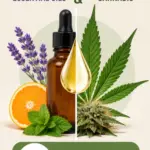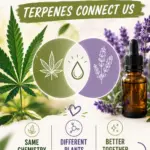

Cannabis terpenes for skin are the aromatic compounds in cannabis that help shape the scent, character and behaviour of topical formulations. Most discussions about cannabis skincare focus on cannabinoids like CBD or THC, but the aromatic compounds in the plant matter too.
Terpenes give cannabis its distinctive scent, and many of the same compounds also appear in essential oils and other aromatic plants used in skincare and aromatherapy. Understanding terpene profiles helps explain why different cannabis extracts smell different and sometimes behave differently in topical products.
Terpenes are part of the wider cannabis skincare picture, especially when you are formulating creams, balms and topical oils. In this guide we’ll look at the most important cannabis terpenes, how they overlap with aromatherapy ingredients, and why they matter when working with creams, balms and other cannabis topicals.
Table of Contents
*As an Amazon Associate, I earn from qualifying purchases
*As a Blimburn Seeds affiliate, I earn from qualifying purchases
What Are Terpenes in Cannabis
Terpenes are aromatic compounds produced by many plants. They contribute to scent and flavour, but they also play protective roles in nature, helping plants defend themselves and interact with their environment.
In cannabis, terpenes are produced in the same glandular trichomes that create cannabinoids. This is why resin-rich flowers tend to have the strongest aroma.
It is important to keep one thing clear from the start: terpenes are not cannabinoids. They do not produce intoxication on their own.
Instead, they shape the aroma, character and complexity of a cannabis variety. Some terpenes are also being studied for anti-inflammatory, antioxidant or antimicrobial properties, which is why they often appear in discussions about botanical skincare.
The Bridge Between Cannabis Terpenes and Aromatherapy
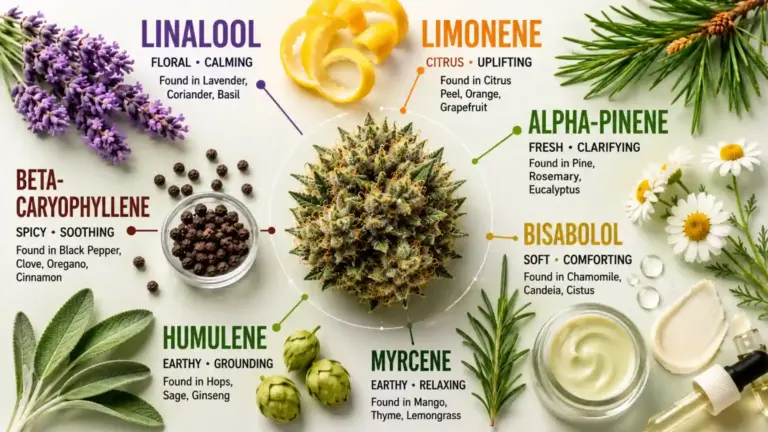
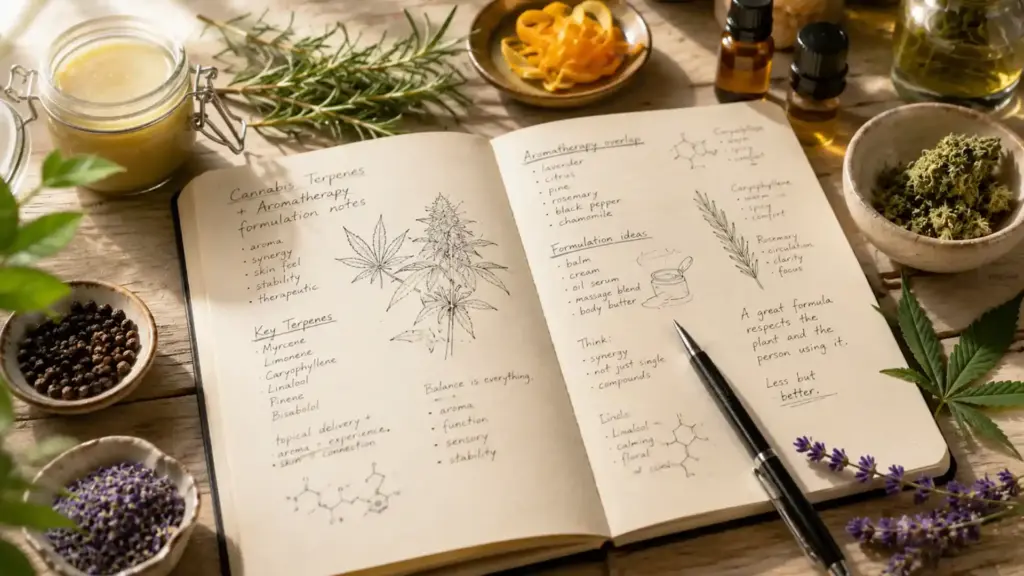
One of the most useful ways to understand cannabis terpenes is to look at them through the eyes of an aromatherapist. Many of the same compounds appear across multiple aromatic plants.
Lavender contains linalool.
Citrus peel contains limonene.
Pine and rosemary contain pinene.
Black pepper contains caryophyllene.
These compounds are not unique to cannabis. They are part of a broader family of plant aromatics that appear in essential oils, herbs, spices and flowers.
That overlap is important for formulators. If you already understand essential oils, you already understand many of the compounds found in cannabis. Cannabis simply presents another botanical source of the same aromatic chemistry. If you fancy exploring that shared chemistry further, my guide to the 14 top terpenes in cannabis and essential oils looks at the major compounds one by one.
This overlap becomes clearer when you look at the complete botanical picture. My Aromatherapy Guide explains the relationship between essential oils, herbs, vegetable oils and terpenes.
How Cannabis Terpenes Interact With Skin
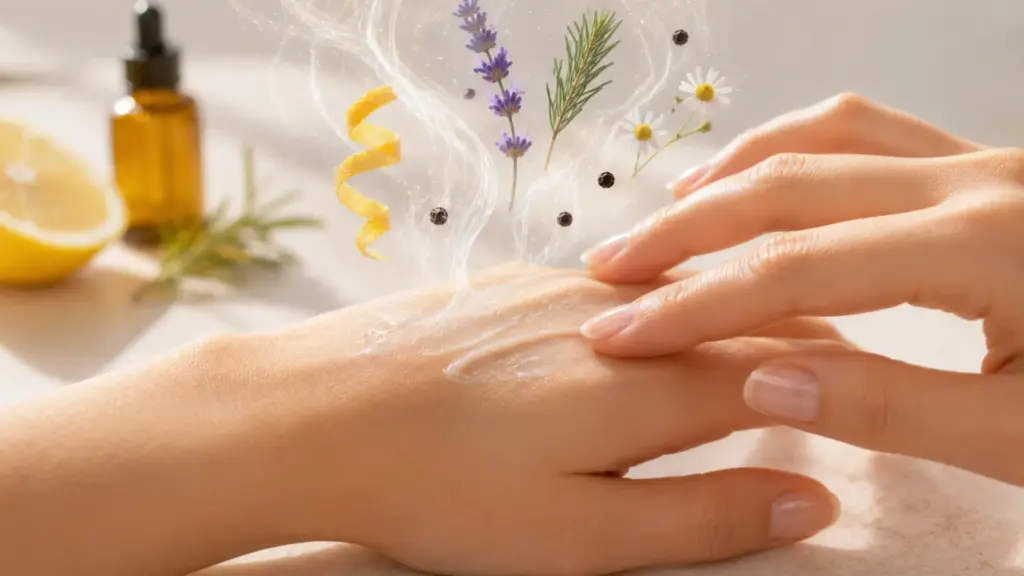
When discussing cannabis terpenes for skin, three practical points matter most.
Aroma and Sensory Experience
Terpenes define the scent profile of a cannabis extract. In topical formulations, this affects the entire sensory experience of the product. For example, a balm that smells fresh, herbal or calming will feel very different to use than one that smells harsh or dirty.
Botanical Activity
Certain terpenes come up again and again in research looking at anti-inflammatory, antioxidant or antimicrobial effects. It’s still an emerging area, but it helps explain why terpene-rich plants show up so often in skincare and aromatherapy.
Skin Penetration
Some terpenes are also looked at in research on skin penetration. In simple terms, they may influence how other compounds move through the outer layers of the skin, which is why they come up in formulation discussions.
Important Cannabis Terpenes for Skin
Myrcene
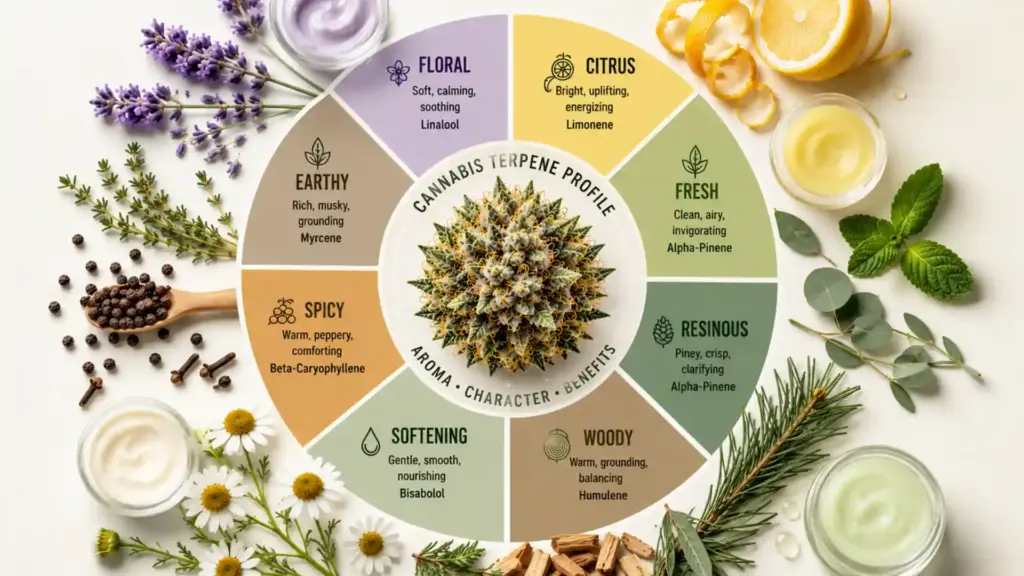
Myrcene is one of the most common terpenes found in cannabis. Aromatically it tends to smell earthy, herbal and slightly musky.
You will often see myrcene mentioned in research exploring inflammation and pain pathways, although most of that research is still early.
Also found in essential oils such as:
- bay
- lemongrass
- thyme
- hops
- cardamom
Limonene
Limonene produces the bright citrus aroma found in oranges, lemons and grapefruits.
It is widely studied in topical delivery research because citrus terpenes may influence skin penetration. In formulations it usually brings a fresh, uplifting aromatic character.
Also found in essential oils such as:
- sweet orange
- lemon
- grapefruit
- lime
- bergamot
Beta-Caryophyllene
Beta-caryophyllene is particularly interesting because it interacts with CB2 receptors in the body.
Aromatically it contributes warm, spicy and woody notes. It is often discussed in research related to inflammation, which is why it attracts attention in cannabis topical conversations.
Also found in essential oils such as:
- black pepper
- clove
- copaiba
- oregano
- cinnamon leaf
Linalool
Linalool is best known as the main aromatic compound in lavender.
It produces a soft floral aroma and is widely associated with calming aromatic blends. In skincare products it often appears in formulations designed to feel gentle and soothing.
Also found in essential oils such as:
- lavender
- coriander seed
- basil
- petitgrain
- rosewood
Alpha-Pinene
Alpha-pinene provides the fresh resinous aroma associated with pine forests and rosemary.
It contributes a clean green note to terpene profiles and appears in research exploring antimicrobial and anti-inflammatory effects.
Also found in essential oils such as:
- pine
- rosemary
- juniper berry
- fir needle
- eucalyptus
Humulene
Humulene has an earthy, woody aroma and often appears alongside caryophyllene in terpene profiles.
It is sometimes discussed in research exploring anti-inflammatory effects and contributes depth to terpene blends.
Also found in essential oils such as:
- hops
- coriander seed
- sage
- basil
- clove
Terpinolene
Terpinolene produces a fresh herbal aroma with light citrus and floral notes.
Although it is less well known than limonene or linalool, it contributes complexity and brightness to terpene profiles.
Also found in essential oils such as:
- tea tree
- sage
- cumin
- cardamom
- nutmeg
Geraniol
Geraniol belongs to the floral fragrance family and is closely associated with rose-like aromas.
It appears widely in perfumery and botanical skincare ingredients.
Also found in essential oils such as:
- rose
- palmarosa
- geranium
- citronella
- lemongrass
Nerolidol
Nerolidol has a woody floral aroma and is often mentioned in research exploring skin penetration.
Because of this, it attracts interest when discussing topical delivery systems.
Also found in essential oils such as:
- neroli
- jasmine
- tea tree
- ginger
- lavender
Bisabolol
Bisabolol is already well known in cosmetic formulations. It is strongly associated with chamomile and appears in many soothing skincare products.
If you want a clear example of the overlap between cannabis chemistry and everyday cosmetic ingredients, bisabolol is a good place to start.
Also found in essential oils such as:
- chamomile
- candeia
- blue tansy
- myrrh
- opopanax
Why Terpenes Matter in Cannabis Topicals
When cannabis topicals are discussed, the focus often lands entirely on cannabinoids. In reality, a full plant extract contains many different compounds.
Terpenes help shape the scent, character and complexity of those extracts. Two cannabis infusions may contain similar cannabinoid levels but still smell and feel very different because their terpene profiles are different.
Understanding terpenes helps formulators move beyond treating cannabis as a single generic ingredient.
Using Terpene-Rich Cannabis in Creams and Balms
If you want to preserve terpene character in a topical formulation, gentle handling matters.
Excessive heat, long extraction times and poor storage conditions can reduce terpene content. Careful processing helps maintain the aromatic profile of the plant material.
It is also helpful to think in terms of terpene profiles rather than strain names.
Ask questions like:
- Do I want a calming floral aroma?
- Something fresh and citrus-like?
- Or something deeper and herbal?
Those decisions influence the entire character of a finished product.
If you are interested in learning more about making anhydrous (water-free) products, here is a selction of formulations to make balms, butters and even a massage candle.
If a product contains water, it will needa preservative and here is a good selection of formulations for making creams and lotions.
Safety Considerations When Working With Terpenes
Terpenes are concentrated aromatic compounds and should be treated with the same respect given to essential oils.
Proper dilution is important, and patch testing is always sensible when working with botanical ingredients. Citrus-derived terpenes may also raise phototoxicity concerns depending on the source and concentration.
As with many botanical ingredients, research into terpene effects is still developing. Responsible formulation means balancing curiosity with caution.
Conclusion
Cannabis terpenes for skin help explain why cannabis topicals are about more than cannabinoids alone.
They influence aroma, contribute to the sensory experience of a product and connect cannabis chemistry with the wider world of aromatherapy.
For formulators working with botanical ingredients, understanding terpene profiles adds another useful tool when designing creams, balms and other topical products.
🎧 Listen Instead
 Spotify
 YouTube
FAQs
What are cannabis terpenes?
Cannabis terpenes are aromatic compounds produced by the cannabis plant. They give different cannabis varieties their distinctive scent and flavour. Terpenes also appear in many other plants used in aromatherapy and skincare, including lavender, citrus, rosemary and chamomile.
Are cannabis terpenes good for skin?
Some terpenes are being studied for anti-inflammatory, antioxidant and antimicrobial properties. In skincare products they mainly influence aroma, sensory experience and sometimes how botanical ingredients behave in topical formulations.
Which terpenes are best for skin?
Several terpenes are commonly discussed in skincare and topical formulations, including beta-caryophyllene, linalool, limonene, myrcene and bisabolol. Each has a different aromatic profile and may contribute different properties in botanical formulations. Many of these compounds appear in both cannabis and essential oils.
Do cannabis terpenes get you high?
No. Terpenes themselves are not intoxicating. The psychoactive effects associated with cannabis come primarily from cannabinoids such as THC, not from the aromatic terpene compounds.
Are cannabis terpenes the same as essential oil terpenes?
Many of them are. The same terpene molecules can appear in different plants. For example, lavender contains linalool, citrus peel contains limonene, and rosemary contains pinene. Cannabis simply produces some of the same compounds.
Can terpenes help other ingredients absorb through the skin?
Some terpenes are studied as penetration enhancers in topical and transdermal research. This means they may influence how certain compounds move through the outer layers of the skin. Research in this area is still developing, but it helps explain why terpene chemistry attracts interest in formulation science.
Can you add cannabis terpenes to skincare products?
In most cannabis skincare products, terpenes are present as part of the cannabis infusion rather than something separate. When cannabis is infused into oils, balms or creams, the terpene profile comes from the plant material itself and how gently it is handled during processing.
If you liked this blog post, I would love it if you shared it with a friend.
If you use Pinterest, please pin this post.