
You may have seen a cannabis balm and thought, “I would love to make that.” Perhaps it was a light body lotion, a facial cleanser, a tincture or a batch of edibles that caught your attention. That is usually how a new formulation begins: with the product first, followed by questions about the ingredients, equipment and whether you can make it successfully at home.
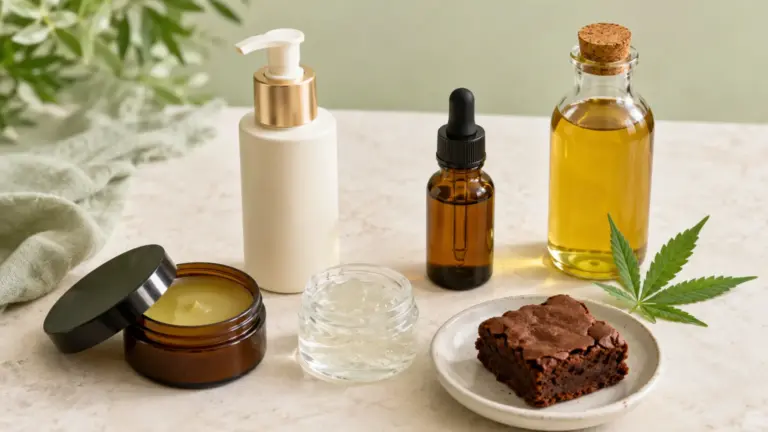
This guide gives you an overview of the DIY cannabis products covered on 420formulator. We will look at balms and butters, creams and lotions, edibles and tinctures, gels, toners and cleansers, and infused oils.
Each section will explain what that type of product involves, the main ingredients you are likely to need and where to find the complete guides and recipes. Some are simple, water-free formulations, while others need an emulsifier, preservative or careful control of strength and portion size. Once you understand what is involved, you can decide which product you would like to make first.
If it’s skincare you want to make, my Skincare Formulation Essentials guide explains the equipment and ingredients you’ll be working with, including how emulsifiers, preservatives and actives fit into a formula.
Table of Contents
Cannabis Balms and Butters
Cannabis balms and body butters are often the products that first draw people into making cannabis skincare. A balm in a tin, a soft butter in a jar and a solid lotion bar look different, but their texture comes from the balance of oils, butters and waxes.
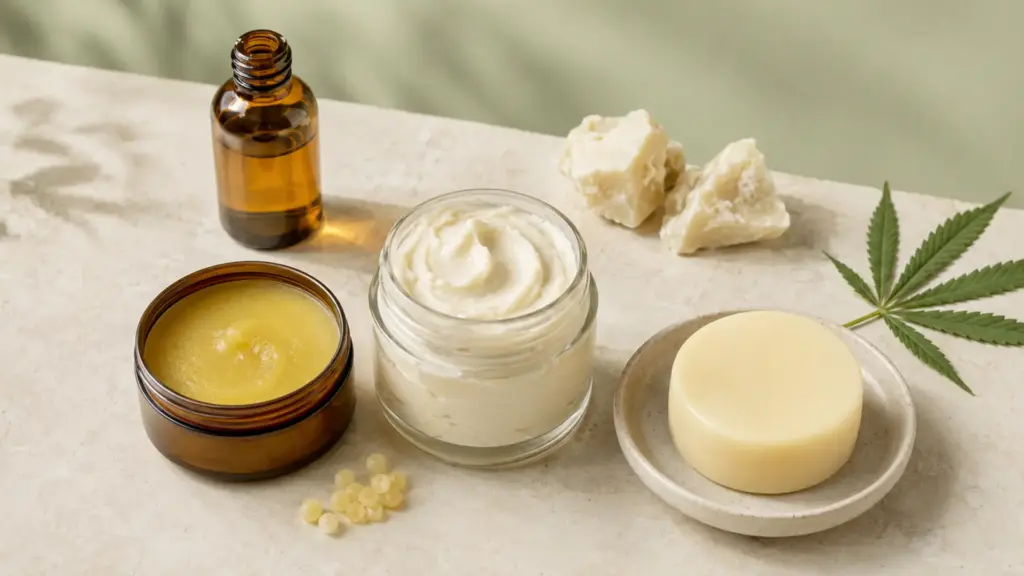
Balms and salves are usually made from cannabis-infused carrier oil, wax and sometimes a plant butter. The oil keeps the product spreadable, while the wax helps it set. More wax makes a firmer balm; use enough for it to hold its shape and it becomes a lotion bar.
A simple body butter is a water-free blend of plant butters and liquid oils, sometimes whipped for a lighter texture. An emulsified body butter also contains water and is closer to a rich cream, which is why it is worth checking the formula rather than relying on the name.
You are likely to use a cannabis-infused carrier oil; shea, cocoa butter or mango butter to add body, creaminess and a more protective skin feel; and beeswax or rice bran wax when the product needs to set. You can add essential oils for fragrance or aromatherapy benefits if you want to. If you are unsure which oils to choose or how much to use, my Holistic Aromatherapy Guide explains skin-safe dilution, blending and the relationship between essential oils and terpenes.
A simple balm or body butter does not usually need an emulsifier or preservative. Use clean, dry equipment and keep water out of the finished product. If you want to add water or a hydrosol, you will need a cream or lotion formula with a suitable preservative. Vitamin E can help the oils stay fresh for longer, but it is not a preservative.
We are still learning about cannabis and cannabinoids, so I present balms and body butters as skincare products rather than treatments for pain or skin conditions.
My cannabis balm recipe makes either a balm in a tin or a soft lotion bar. For a softer, wax-free product, try the Shea Butter and Cannabis Body Butter, or browse the complete Balms & Butters collection for more ideas. For a lighter whipped option, my mango shea butter recipe combines both butters with jojoba, avocado and coconut oils. If you fancy something warmer and a bit more indulgent, my CBD massage candles melt into a silky oil made with mango butter, cosmetic soy wax and cannabis infused rice bran oil.
Cannabis Creams and Lotions
A cannabis lotion is usually thin enough for a pump bottle, while a cream is thicker, richer and more protective. Both combine water and oil. The water gives them a lighter feel than a balm, but it also means you need an emulsifier and a preservative. Product names overlap, so follow the formula rather than the name on the jar.
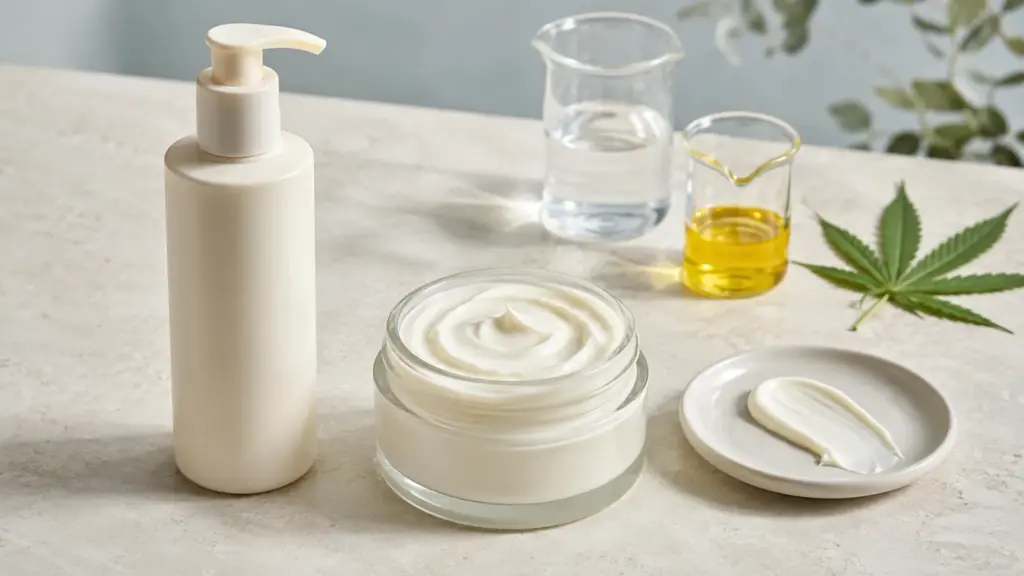
For a simple cream or lotion, you will normally need distilled water or a hydrosol, a cannabis-infused carrier oil, a cosmetic emulsifier and a suitable preservative. Oils, butters, glycerin and thickeners can change the richness, texture and skin feel, but you do not need every optional ingredient to make a good first cream.
For the creams and lotions in this section, cannabis is added through an infused oil. An alcohol tincture is not a direct substitute and should not be stirred into the finished product.
The emulsifier keeps the oil and water mixed. The preservative helps control bacteria, yeast and mould. Beeswax cannot replace an emulsifier, and vitamin E cannot replace a preservative.
Follow a tested formula for your first batch. You will usually heat the water and oil separately, blend them together and add heat-sensitive ingredients as the cream cools. You will need accurate scales, a thermometer, heatproof containers and a stick blender. My guide to tools and equipment for making DIY skincare will help you prepare. The formula will tell you if the pH needs to be checked.
Start with my cannabis body lotion formula which takes you through each stage. When you are ready for something more specialised, try the cannabis foot cream with urea, or browse the Creams & Lotions collection for more ideas.
Cannabis Edibles and Tinctures
A tray of brownies, a jar of gummies or a small bottle of tincture may be what sends you into the kitchen. Taste and texture matter, but with edibles you also need to know the estimated strength of the whole batch and each portion.
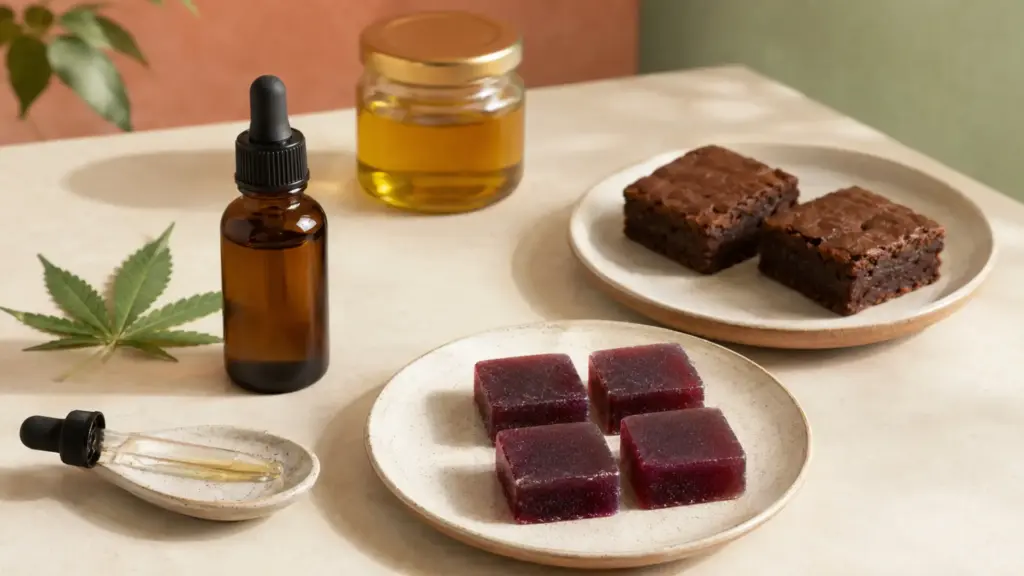
Edibles are foods or drinks made with cannabutter, infused oil or a measured amount of tincture. A tincture is a concentrated extract, usually made with food-grade alcohol. It can be taken under the tongue, swallowed or added to food. It can also be included in a body gel that has been designed to work with its alcohol content.
My cannabis-infused oils and butters guide explains how to prepare an infusion and includes a calculator to help you estimate strength.
Without laboratory testing, the strength of a homemade edible or tincture is always an estimate. Work out the amount in the whole batch, mix it thoroughly and divide it into equal portions. Edibles can take from 30 minutes to two hours to produce intoxicating effects, so allow plenty of time before taking more.
Use only food-grade ethanol for anything taken orally, never isopropyl or denatured alcohol. Keep high-proof alcohol away from naked flames. Label the finished product with the date and estimated strength, and store it away from children, pets and ordinary food.
My cannabis tincture guide takes you through the method. Before making an edible, read the five common mistakes, then try the easy vegan cannabis gummies or browse the Edibles & Tinctures collection.
Cannabis Gels, Toners and Cleansers
A cooling gel, a light facial toner or a cleanser that removes make-up may be the product you want to make. They share one section of the website, but they do quite different jobs:
- A gel is usually water-based and thickened with a gelling agent.
- A toner is a thin, water-based product that is left on the skin.
- A cleanser may be an oil blend that is wiped away or a water-based product made with mild cleansing ingredients and rinsed off.
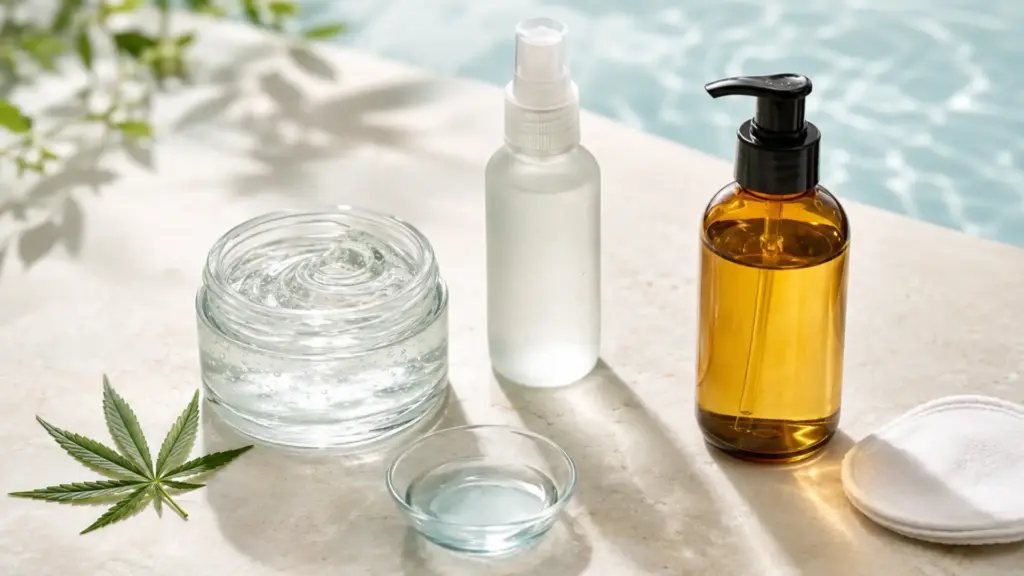
The cannabis ingredient needs to suit the product. An infused oil fits naturally into an oil cleanser. Adding it to a water-based gel or toner is different: you will need a suitable solubiliser, emulsifier or water-dispersible cannabis ingredient. Shaking the bottle may mix it for a moment, but it will not make a stable product.
An alcohol tincture can be an easier fit for some gels because it does not introduce a separate oil phase. The gel still needs to be designed for it, as alcohol can change the thickness and may not work with every gelling agent.
An oil-only cleanser does not usually need a preservative or pH check. Try my DIY cannabis squalane cleanser, which can be wiped away with a damp cloth or cotton pad, or browse the Gels, Toners & Cleansers collection.
Cannabis Infused Oils
You may want to make a light body oil, a massage oil with plenty of glide or an infused cooking oil for a particular recipe. You may also discover that the balm, cream or edible you have chosen begins with an infused oil.
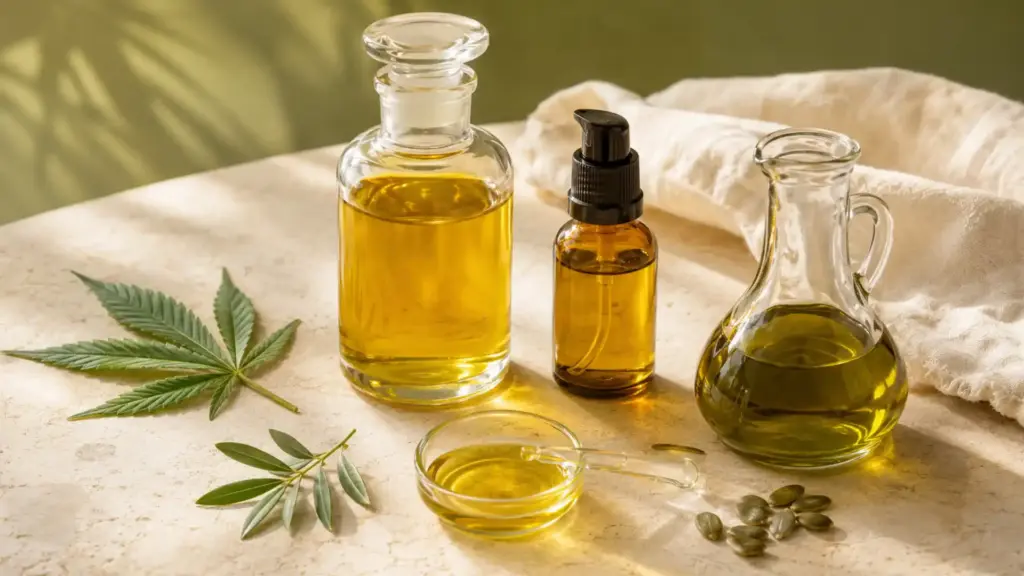
A cannabis-infused oil can be a finished product or an ingredient in another formula. It is made by warming prepared cannabis in a carrier oil and then filtering out the plant material.
Start with the product you want to make. For cooking, every ingredient must be food-grade and the flavour of the oil needs to suit the recipe. For skincare or massage, think about skin feel and shelf life. A topical oil may also contain essential oils or other cosmetic ingredients that are not intended for eating, so label it clearly.
The carrier oil is not simply a container for cannabis. Olive oil will feel and taste quite different from a lighter oil, and each one brings its own colour, aroma and shelf life. It also needs to cope with the heat of the infusion. More delicate oils can be added later when you make the finished product. Before choosing an oil, it helps to understand the difference between hemp oil and CBD oil, because hemp seed oil is a carrier oil while CBD oil contains a cannabinoid extract.
If you are starting with cannabis flower, it will normally need to be decarboxylated first. My guide to cannabis-infused oils and butters explains the method and includes a calculator to help you estimate strength. Record what you used and the date, then store the strained oil away from heat and light. If you want a milder, clearer-headed starting material, my guide to high CBD strains compares ten options and their terpene profiles.
If you prefer a machine to handle the decarboxylation and infusion, my POT by NOIDS review explains how the herbal infuser performs in practice.
Once made, the oil can be used in a balm, cream, oil cleanser or edible recipe. Follow the amount given in the final formula because changing the oil can affect the texture, flavour, stability and estimated strength.
For a finished topical oil, try my cannabis massage oil recipe or Pumpkin Seed body oil with cannabis. You can also browse the Infused Oils collection for more ideas.
Before You Start Making DIY Cannabis Products
Before you get the scales and mixing bowls out, check that the cannabis ingredient is legal where you live and that you know whether it contains THC, CBD or both. The rules vary and may change when you travel.
Label every batch with the ingredients, date, intended use and estimated strength where relevant. Keep edibles and skincare products separate so that nobody mistakes one for the other, and store them away from children and pets.
Try a new topical on a small area first. Keep it away from your eyes and broken or irritated skin. If it causes a reaction, wash it off and stop using it.
THC is intoxicating, so do not drive or use machinery while under its effects. CBD is not intoxicating, but it can affect how some medicines work, as this FDA guidance on cannabis-derived products explains. If you take medication, are pregnant or breastfeeding, or have a medical condition, speak to a doctor or pharmacist before taking cannabis orally.
Conclusion
Do not feel that you need to understand every product in this guide before you begin. Choose the balm, cream, edible, tincture, gel, toner, cleanser or infused oil that made you curious in the first place, then follow one tested formula from beginning to end.
Read the recipe through before buying ingredients, check the equipment you will need and start with a small batch. Keep notes, label what you make and change one thing at a time. You will learn far more from one carefully made batch than from trying to master every type of formulation at once.
🎧 Listen Instead
 Spotify
 YouTube
FAQ
What is the easiest cannabis product to make at home?
Water-free products such as infused body oils, balms and body butters are usually the easiest because there is no water phase to emulsify or preserve. That does not mean you must begin there. If it was a lotion or a batch of gummies that caught your attention, use a tested recipe and make a small first batch.
Do I need to decarboxylate cannabis before making infused oil?
Usually, yes if you want THC or CBD in the finished oil. Decarboxylation uses controlled heat to convert THCA and CBDA into THC and CBD. If you deliberately want the acidic cannabinoids, the method will be different. This guide to cannabis-infused oils and butters explains the process.
What is the difference between cannabis tincture and cannabis-infused oil?
A cannabis tincture is normally made with alcohol, while cannabis-infused oil uses a carrier oil. A tincture can be taken orally, added to an edible or used in a gel designed to work with its alcohol content. Infused oil fits balms, oil cleansers and the oil phase of creams and lotions. A food-grade version can also be used in edibles. They are not direct swaps.
How do I calculate the strength of homemade cannabis edibles?
You can make a sensible estimate, but only laboratory testing can give you the exact strength. You need the weight and THC or CBD percentage of the cannabis, the amount in the finished batch and the number of portions. Allow for losses, mix thoroughly and label what you make. This guide to the five common mistakes when making cannabis edibles includes a link to Emily Kyle’s dosage calculator.
Do homemade cannabis creams and lotions need a preservative?
Yes. If a cream or lotion contains water, it needs a suitable broad-spectrum preservative. Vitamin E is an antioxidant, not a preservative. This guide to natural preservatives in cosmetics explains some of the choices.
Can cannabis topicals make you high?
Usually not, but it can happen. Most cannabis balms, creams and salves act mainly where they are applied, although absorption varies with the formula, strength, amount used and condition of the skin. I have experienced psychoactive effects from some topicals, so start with a small amount and do not drive if you feel impaired. Products deliberately designed for systemic absorption are more accurately described as transdermal.
If you liked this blog post, I would love it if you shared it with a friend.
If you use Pinterest, please pin this post.