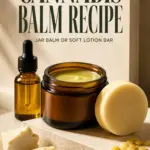

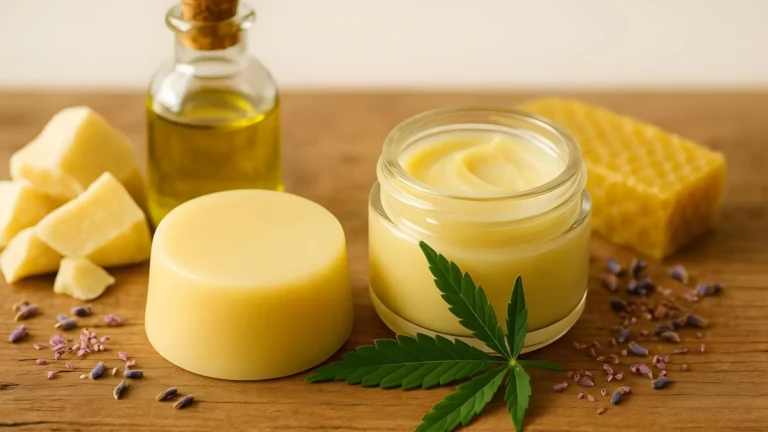
If you’re dealing with dry hands, rough feet, cracked elbows, or skin that needs a little extra comfort, this cannabis balm recipe gives you a rich, water-free balm that can also be poured into moulds as a soft lotion bar.
Table of Contents
*As an Amazon Associate, I earn from qualifying purchases
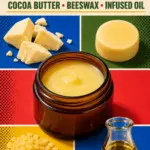
It uses cocoa butter, beeswax and cannabis-infused olive oil to create a simple topical balm that melts into the skin and leaves a protective, moisturising layer behind. You can keep it in a jar for scooping out, or pour it into silicone moulds if you prefer an easy glide-on bar.
Cannabis topicals are popular because they let you apply infused oils directly where you want them, without making a complicated cream or emulsion. This recipe is especially useful for dry hands, feet, elbows, knees and cuticles. To see where balms fit alongside creams, lotions, cleansers, tinctures and edibles, read my DIY cannabis products guide.
Research into cannabinoids and skin is still developing, with reviews suggesting potential for topical use while also noting that stronger clinical evidence is still needed.
Why Make Your Own Cannabis Balm?
Making your own cannabis balm means you control the ingredients, texture and finish. You can keep it rich and protective for dry hands and feet, pour it into a jar for everyday use, or mould it into a soft lotion bar that glides over the skin.
This recipe is simple enough for beginners, but still useful if you already make your own skincare. You can adjust the firmness, choose your preferred infused oil, and keep the essential oils gentle so the finished balm suits your skin.
Cannabis Balm Recipe
Ingredients:
- 50g Cocoa Butter
- 34g cannabis-infused olive oil (see how to make it)
- 14g beeswax
- 1g vitamin E oil
- 1g essential oils of your choice
This is a 100g anhydrous balm formula, meaning it contains no water. Because the total batch size is 100g, the gram weights also show the formula percentages, which makes the recipe easy to scale up or down.
This product works well for me where I live, but can vary depending on where in the world you live – and what the ambient temperature is. Therefore, I suggest you make a test batch first using plain olive oil that has not been infused so you can see how it behaves.
If the bar bends, dents deeply or becomes slippery in your hand, increase the beeswax to 15% and reduce the olive oil to 33%.
If it holds perfectly but drags and takes too long to release product, reduce the beeswax to 13% and increase the olive oil to 35%.
Method:
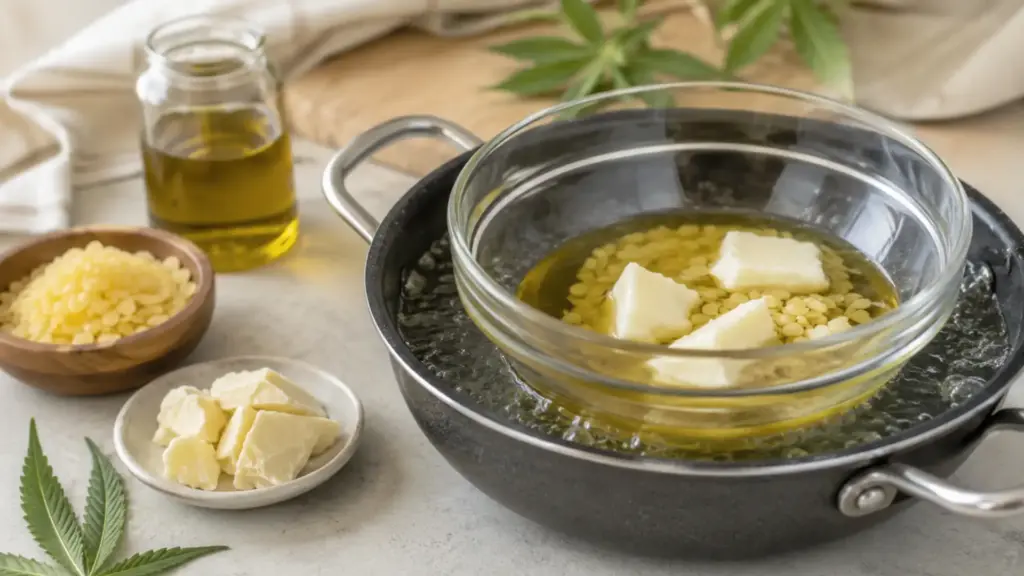
- Add the cocoa butter, cannabis infused olive oil and beeswax to a heatproof bowl set over a pan of gently simmering water.
- Warm slowly, stirring now and then, until everything has fully melted and combined. Try not to overheat the mixture, especially once the infused oil has gone in.
- Remove from the heat and let the mixture cool for a few minutes. It should still be fully liquid, but no longer very hot.
- Stir in the vitamin E oil and essential oils, if using, and mix well.
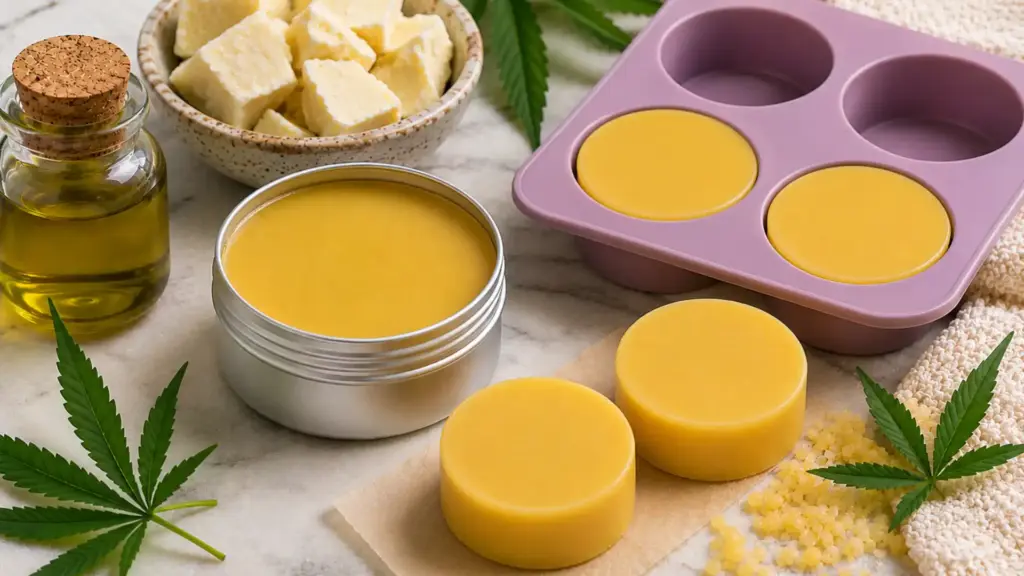
- Pour into clean, dry tins or silicone moulds. Use tins or jars for a scoopable balm, or moulds for soft lotion bars.
- Leave to cool at room temperature until firm. Once set, add the lids to your jars or remove the lotion bars from their moulds.
- Store in a cool, dry place, away from direct sunlight and heat.
You can read more about the tools I use in this blog: Tools & Equipment for Making DIY Skincare Products at Home.
How to Use Your Cannabis Balm or Lotion Bar
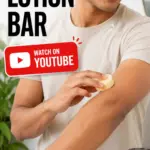
Rub a small amount of balm between your fingers, then massage it into dry or rough skin. For lotion bars, glide the bar gently over the skin and massage in any excess.
Use it on hands, feet, elbows, knees, cuticles or any dry areas that need extra softness. For best results, apply after a shower or bath, while the skin is still slightly damp, so the balm can help seal in moisture.
What to Expect from a Cannabis Balm
A cannabis balm is best understood as a topical moisturising balm, not a medical treatment. It can be massaged into dry, tired or overworked areas, and many people like cannabis topicals because they feel comforting as part of a body care routine.
Research into topical cannabinoids is still developing. Some reviews suggest potential for skin comfort and inflammatory pathways, but stronger human studies are still needed before cannabis balms can be presented as proven treatments for pain, arthritis or skin disease.
Ingredient Spotlight
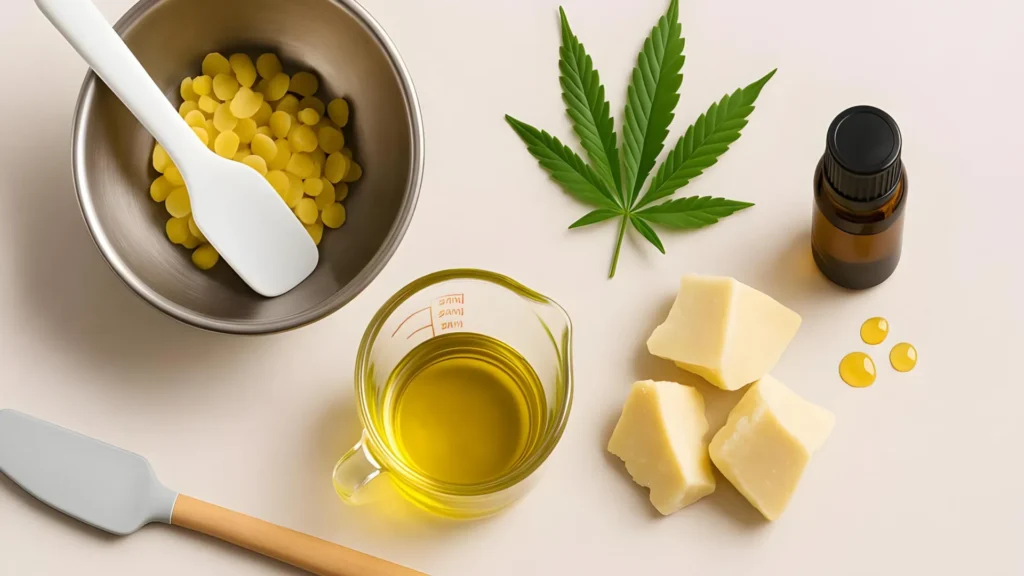
Cocoa Butter
Cocoa butter gives this cannabis balm recipe its rich, creamy base. It helps firm the balm, adds a protective feel on the skin, and works especially well for dry hands, feet, elbows and knees. Its natural chocolate-like aroma also gives the finished balm a warm, comforting scent without needing much extra fragrance.
Cannabis-Infused Olive Oil
Cannabis-infused olive oil brings the cannabis element into this balm and gives the formula its soft, spreadable feel. Olive oil is rich and moisturising, making it a good choice for dry skin areas such as hands, feet, elbows and knees.
The infused oil also carries the plant compounds from your cannabis into the balm. The exact strength will depend on the cannabis you use, how much you infuse, and how carefully the oil is prepared.
Beeswax
Beeswax gives this cannabis balm recipe its firmness and structure. It helps turn the melted oils and butter into a solid balm or soft lotion bar, depending on whether you pour the mixture into a jar or a mould.
It also leaves a light protective layer on the skin, which helps reduce moisture loss and makes the balm feel more substantial. If you want a softer balm next time, reduce the beeswax slightly. If you want a firmer bar, increase it a little.
Vitamin E
Vitamin E is included here as an antioxidant for the oils in the balm. It helps slow oxidation, which means it can help keep the finished balm fresher for longer.
It is not a preservative, though. Because this cannabis balm recipe contains no water, it does not need a broad-spectrum preservative, but you still need to keep water out of the jar and use clean, dry hands when applying it.
Essential Oils
Essential oils are optional in this cannabis balm recipe. They can add scent and extra character, but they should be used gently, especially if the balm is for dry or sensitive skin.
Lavender, Geranium and Roman Chamomile are softer choices for a skin balm. Peppermint can feel cooling, but use it carefully and avoid it on delicate areas. Tea Tree can be useful in some skincare blends, but it has a stronger character and is not always the best choice for a rich everyday balm.
Keep the total essential oil amount at 1g for this 100g recipe. That gives you a 1% dilution, which is a sensible level for a leave-on body balm. For more detail on safe essential oil dilution, the Tisserand Institute has a useful guide explaining why dilution percentages matter.
Get inspired by reading up on some of these Essential Oils.
Safety, Storage and Shelf Life
This cannabis balm recipe is water free, so it does not need a broad-spectrum preservative. However, you still need to keep water out of the jar. Use clean, dry tins or moulds, and apply the balm with clean, dry hands or a small spatula.
Store the finished balm or lotion bars in a cool, dry place away from direct sunlight and heat. If your kitchen or bathroom gets warm, keep the bars in a tin or jar so they do not soften too much.
Used and stored carefully, this balm should keep for around six to nine months. If the smell, colour or texture changes, or if the balm smells rancid, throw it away and make a fresh batch.
Avoid using the balm on broken skin, near the eyes, or on delicate intimate areas. If you are using essential oils, keep the amount low and patch test first, especially if your skin is sensitive.
Conclusion
Making your own cannabis balm is a simple way to create a rich, moisturising topical for dry hands, feet, elbows, knees and cuticles. With cocoa butter, beeswax and cannabis infused olive oil, you get a water free balm that can be poured into a jar or moulded into a soft lotion bar.
Once you understand the basic formula, you can adjust the firmness, change the essential oils, or use different moulds to suit how you like to apply it. Keep the recipe clean, simple and gentle, and it becomes an easy everyday balm for dry skin.
🎧 Listen Instead
 Spotify
 YouTube
FAQ
What is cannabis balm good for?
Cannabis balm is usually used as a rich topical balm for dry hands, feet, elbows, knees and cuticles. It can also be massaged into areas that feel tired or overworked, but it should not be presented as a treatment for pain, arthritis or skin disease.
Does cannabis balm work for pain?
Many people use cannabis balms as part of a massage or self-care routine for areas that feel tense, tired or uncomfortable. Research into topical cannabinoids is still developing, so this recipe is best described as a soothing, moisturising balm rather than a proven pain treatment.
How do you make cannabis balm at home?
You make cannabis balm by first infusing cannabis into a carrier oil, then blending that infused oil with cocoa butter and beeswax. Once melted together, you can add vitamin E and optional essential oils, pour the mixture into jars or moulds, and leave it to set.
What ingredients are in cannabis balm?
Cannabis balm is usually made with cannabis-infused oil, a plant butter such as cocoa butter or shea butter, and a wax such as beeswax to give it firmness. Many recipes also include vitamin E oil as an antioxidant, plus a small amount of essential oils for therapeutic benefit and fragrance.
Does topical cannabis get you high?
A CBD balm will not make you high, but I would not make the same promise for every THC balm. Many simple balms are unlikely to produce a noticeable effect, but the strength of the infusion, how much you apply and the way the balm has been formulated all matter. Start with a small amount and give it time before applying more.
How long does homemade cannabis balm last?
Homemade cannabis balm usually lasts around six to nine months if it is stored in a cool, dry place away from direct sunlight and heat. If the balm changes smell, colour or texture, or starts to smell rancid, throw it away and make a fresh batch.
How much cannabis should I use for balm?
For a simple infused oil, many home recipes use around 5 to 10g of dried cannabis flower per 250ml of carrier oil. This is not an exact dosage, because the final strength depends on the cannabis, the infusion method, and how much infused oil you use in the balm.
Is it legal to make cannabis balm at home?
The legality of making cannabis balm at home depends on where you live and the cannabis laws in your area. Always check your local rules before making, using or sharing cannabis topicals.
What’s the best carrier oil for cannabis balm?
Olive oil is a good choice for this cannabis balm recipe because it is rich, moisturising and easy to infuse. Coconut oil, sweet almond oil and sunflower oil can also be used, but each one changes the feel of the finished balm.
If you liked this blog post, I would love it if you shared it with a friend.
If you use Pinterest, please pin this post.